How Far Can Greed Go? An Inheritance Dispute, Alleged Attempted Murder, and an 18-Year Disappearance
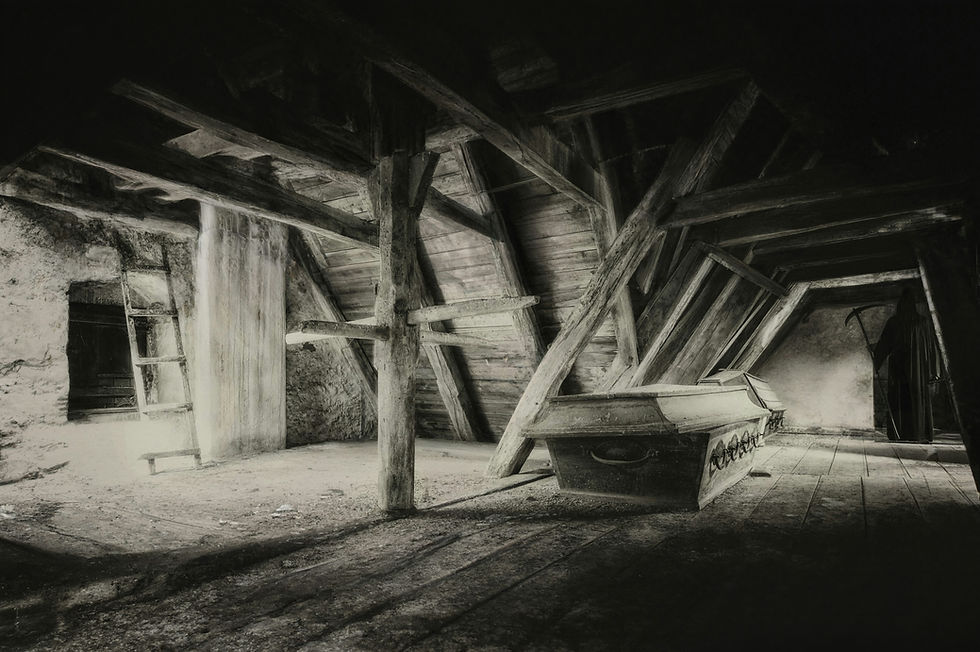
Clairvius Narcisse was a man whose reported case became one of the most widely discussed accounts of alleged zombification. In April 1962, Narcisse was admitted to the Albert Schweitzer Hospital suffering from a serious illness. His condition deteriorated, physicians pronounced him dead, and his death was recorded. His body was subsequently buried, and his family believed that he had died. Eighteen years later, in 1980, a man appeared claiming to be Clairvius Narcisse. He approached his sister Angelina and identified himself as her brother. His identity was reportedly supported by his knowledge of private family information and a childhood nickname known to the family.
Narcisse's account of what happened after his apparent death was extraordinary. He claimed that he had remained conscious during his apparent death and burial but was unable to move or communicate. According to his account, his grave was later opened and he was removed. He said he was taken away and forced to work on a plantation with other people whom he described as being in a similar condition. Narcisse reportedly remained under the control of the people who had taken him for approximately two years. After the person controlling him died, Narcisse escaped, but he did not immediately return to his family. Instead, he remained away from his home community for approximately another sixteen years.
The alleged reason Narcisse remained away is particularly important to this research. Narcisse stated that he had been involved in a dispute with his brother concerning land. He believed his brother was responsible for arranging his zombification and disappearance because of that dispute. According to Narcisse's account, he feared returning while his brother was alive. He eventually returned to his community in 1980, after learning that his brother had died. Thus, according to Narcisse's own testimony, the underlying conflict was not simply a disagreement between siblings; he believed that his brother had attempted to remove him from a property dispute by having him rendered powerless, buried, removed from his grave, and forced into labor.
The case became the subject of investigation by Haitian psychiatrist Lamarque Douyon, who examined Narcisse after his return. The case subsequently attracted international attention, particularly through the work of ethnobotanist Wade Davis. Davis traveled to Haiti to investigate Haitian zombification practices and later proposed that certain substances, including tetrodotoxin and preparations involving Datura, might explain some reported cases of zombification. Davis's interpretation became highly controversial, however, and subsequent researchers questioned whether the proposed pharmacological explanation could account for the phenomenon. The scientific mechanism behind Narcisse's reported experience has therefore never been established as fact.
There is an important distinction between the different components of the story. It is historically documented that a man named Clairvius Narcisse was admitted to the Albert Schweitzer Hospital in 1962, was pronounced dead, was buried, and that a man identifying himself as Narcisse returned to Haiti in 1980. The extraordinary explanation concerning what happened between his burial and his return comes principally from Narcisse's own account and subsequent investigations. His allegation that his brother arranged the ordeal because of a land dispute should therefore be described as Narcisse's reported account, rather than as an independently established fact.
The broader historical background is essential. Haitian concepts of zombification developed within a complex religious and cultural environment influenced by West African traditions, Catholicism, slavery, colonialism, and the development of Haitian Vodou. The Haitian concept of a zonbi is also substantially different from the modern Western fictional image of a corpse that rises from the grave and attacks the living. Historically, the concept has been associated with the loss of personal autonomy and control over an individual rather than simply the resurrection of a physically dead person. In Haitian cultural contexts, accusations of zombification have also carried social and moral implications concerning power, exploitation, punishment, and control.
Narcisse's case became particularly significant because it appeared to connect these cultural beliefs to a documented individual who had actually been declared dead and subsequently returned to his community eighteen years later. The alleged land dispute involving his brother adds another dimension to the case: property and family conflict were presented by Narcisse himself as the motive behind his disappearance. That makes the case relevant to the broader investigation into the extreme consequences that can arise when family relationships, property rights, inheritance, and control of land become intertwined.
The most extraordinary element of the case is therefore not simply the claim that Narcisse was a "zombie." It is the alleged sequence surrounding the property dispute: a man was declared dead, buried, later claimed to have been removed from his grave and forced into labor, remained separated from his family for approximately eighteen years, and ultimately attributed the entire ordeal to a conflict with his own brother over land. The factual status of each part of that sequence differs, but the story remains one of the most unusual documented accounts connecting a family property dispute with alleged disappearance and zombification.
If This Happened in the United States: If the events described in Narcisse's account occurred in the United States and could be proven with evidence, the conduct could potentially constitute numerous serious crimes beyond attempted murder. Deliberately incapacitating a person and causing them to be buried alive could support charges such as attempted murder, aggravated assault, or poisoning, depending on the evidence and the applicable state law.
Removing the person from the grave and transporting them against their will could constitute kidnapping, while keeping them confined for an extended period could constitute false imprisonment or unlawful restraint. If the person was then compelled to work through force, threats, physical restraint, or coercion, the conduct could also constitute forced labor or involuntary servitude under federal law. Federal statutes including 18 U.S.C. §§ 1584 and 1589 specifically address involuntary servitude and forced labor, while federal kidnapping law is addressed in 18 U.S.C. § 1201.
If other people participated in planning or carrying out the scheme, prosecutors could potentially pursue conspiracy charges in addition to the underlying offenses. If the perpetrators transported the victim across state lines or otherwise satisfied federal jurisdictional requirements, federal kidnapping and forced-labor statutes could become relevant. The length of the alleged confinement would also be significant: this would not be treated simply as a single assault occurring at one point in time, but potentially as a continuing course of criminal conduct involving deprivation of liberty and compelled labor.
The property component could create an entirely separate set of potential offenses. If the purpose of removing the person was to obtain control of his land, investigators would examine what happened to the property after he was presumed dead.
If someone used the presumed death to obtain title, transfer the property, open or manipulate an estate, forge documents, make fraudulent representations to a court or government agency, collect rents or agricultural income, or otherwise take control of property belonging to the missing person, additional charges could potentially include theft, fraud, forgery, fraudulent transfer, false statements, or other property and estate-related offenses, depending on the jurisdiction and the evidence. In other words, the alleged scheme could potentially have two distinct dimensions: a crime against the person and a crime against the person's property.
The important qualification is that these are the offenses that could potentially apply to the conduct as a hypothetical American fact pattern; they are not findings that these crimes occurred in Narcisse's actual case. Narcisse's allegation that his brother was responsible for his disappearance and that the dispute involved land remains an allegation within his account, while the legal characterization of particular conduct would depend upon the jurisdiction, evidence, and facts that could be proven in court.

The story of Clairvius Narcisse stands as a disturbing illustration of how far hatred, fear, and greed can potentially drive human behavior. From the ancient story of Cain and Abel to conflicts documented in modern courts, the relationship between siblings has sometimes become a battlefield when property, inheritance, power, and perceived injustice enter the equation. The names and circumstances change across centuries, cultures, and legal systems, but the underlying human conflict remains recognizable: one person believes another has taken what belongs to them, and the value placed on land, money, status, or control can become greater than the value placed on the family relationship itself.
Narcisse's account is particularly disturbing because the alleged conflict was not simply about dividing an estate after death. According to his testimony, his brother's alleged desire to control land was connected to an eighteen-year disappearance from his family and community. Whether every element of that account can be independently established is a separate historical question. What cannot be ignored is the broader lesson the story presents: inheritance can expose conflicts that were already buried beneath the surface of a family, and in extreme circumstances, greed and resentment can transform an inheritance dispute into something far more destructive than a fight over property.
From Cain and Abel to the modern courtroom, the history of humanity contains repeated examples of families turning against themselves over land, wealth, succession, and perceived entitlement. An inheritance may be nothing more than a piece of paper legally transferring property from one generation to another, but to the people receiving it, it can represent money, security, recognition, revenge, control, or the validation of a lifetime of perceived sacrifice. That is why the most dangerous inheritance disputes are rarely about the property alone. They are about what the property represents to the people fighting over it.

Understanding the laws governing an estate—or working with someone who is familiar with these situations—can save families enormous amounts of time, confusion, expense, and unnecessary conflict. Estate matters can involve wills, intestacy, probate, title, liens, debts, creditor claims, beneficiary rights, jointly owned property, partition, and the eventual distribution or sale of real estate. When family members do not understand how those rules operate, assumptions and emotions can quickly fill the gaps. One heir may believe they own the house outright, another may believe they are entitled to a larger share, and another may believe they can prevent a sale simply because they live there. Understanding the actual legal position can replace assumptions with facts.
The goal is not simply to determine who is right or wrong. It is to understand what the estate actually owns, who has a legal interest, what obligations exist, what options are available, and what steps must occur before property can be transferred or divided. Getting those questions answered early can prevent heirs from spending years fighting over something that could have been resolved through proper documentation, negotiation, probate procedures, or a lawful sale or distribution.
Sometimes the most valuable thing an advisor can provide is clarity before the family reaches the point where everyone needs a lawyer. An estate-equity professional familiar with these scenarios can help identify the property, examine the available records, organize the relevant information, identify potential issues, and help the heirs understand the questions that should be taken to qualified legal counsel. Knowledge of the process can save time. Clarity can prevent confusion. And sometimes, understanding the law before the family begins fighting over the property can preserve relationships that money could never replace.


Comments